

BPC-157 5mg / 10mg
5mg
$56.99
Sale price
$56.99
Regular price
$71.99
Skip to product information
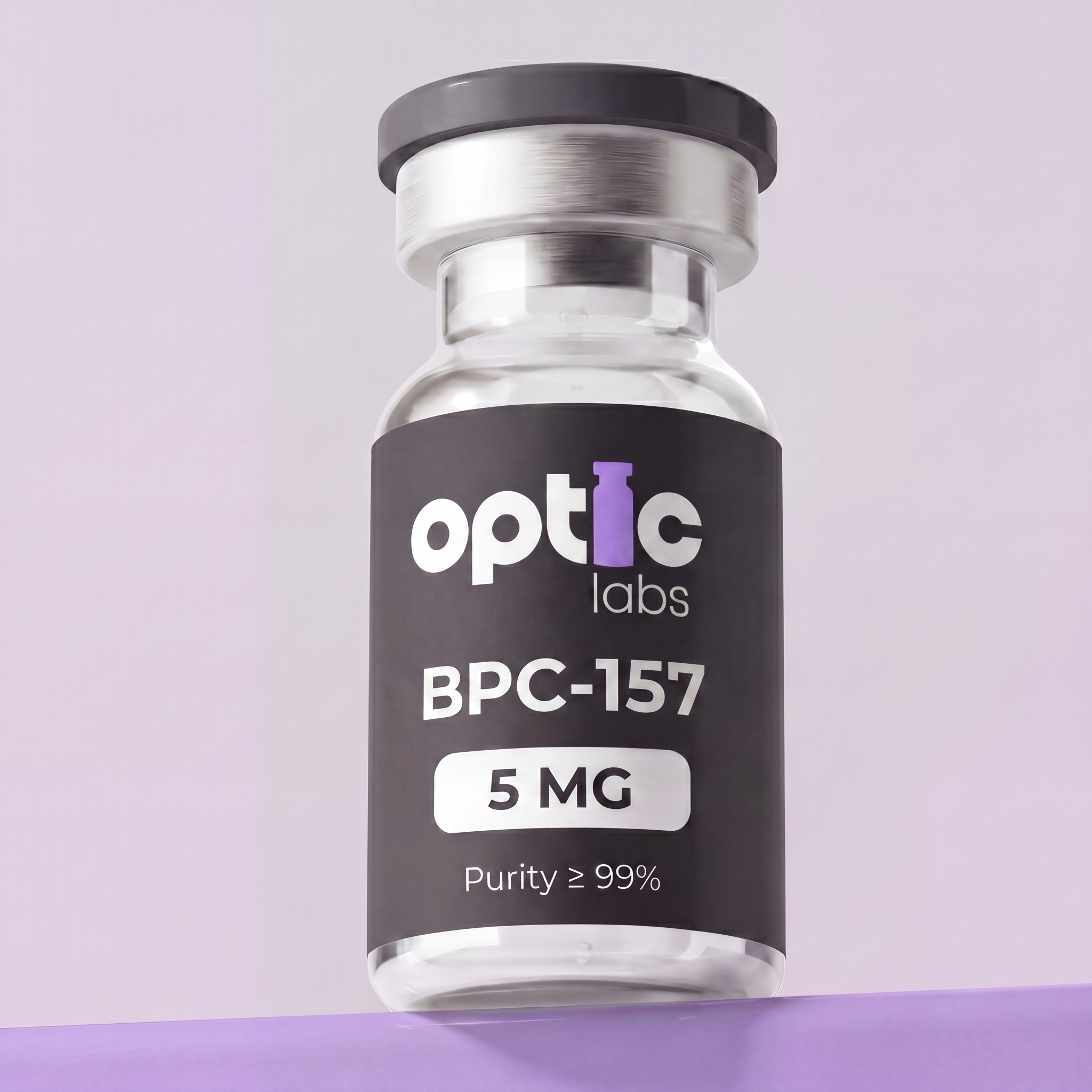
Buy high-purity BPC-157 in Australia (5mg / 10mg). Third-party lab tested at >99% purity. Australian-domestic shipping, AUD pricing, supplied for laboratory research use only.
About BPC-157
BPC-157 (Body Protection Compound-157) is a stable, 15-amino-acid synthetic peptide derived from a protein originally isolated from human gastric juice. Optic Labs supplies BPC-157 as a high-purity lyophilised powder in 5mg and 10mg vials, packaged for in vitro and preclinical laboratory research. Each batch is independently lab-tested by HPLC for purity and identity, with certificates of analysis available on request.
BPC-157 has become one of the most widely studied research peptides in the angiogenesis, cytoprotection and tissue-repair literature. It has been investigated for its effects on tendon-to-bone healing, gastrointestinal mucosal integrity, vascular development, and modulation of nitric oxide and growth-factor pathways in animal models. Optic Labs supplies the compound for laboratory research only — not for human consumption, clinical use, or any therapeutic application.
Product specifications
- Compound: BPC-157 (Body Protection Compound-157)
- CAS number: 137525-51-0
- Molecular formula: C62H98N16O22
- Molecular weight: ~1419.55 g/mol
- Sequence: Gly-Glu-Pro-Pro-Pro-Gly-Lys-Pro-Ala-Asp-Asp-Ala-Gly-Leu-Val (15 amino acids)
- Form: Lyophilised (freeze-dried) white powder
- Purity: >99% by HPLC
- Available sizes: 5mg vial / 10mg vial
- Storage: Store unreconstituted vials at 2–8°C; protect from light. Reconstituted solution stored at 2–8°C and used within 30 days.
- Origin: Manufactured to research-grade specifications, third-party HPLC verified
- Shipping: Australia-wide domestic dispatch from Sydney, NSW
Research background
The BPC-157 sequence is a partial fragment of a larger gastric protein, Body Protection Compound, first characterised in published research in the 1990s. The 15-amino-acid synthetic analogue used in research is stable in human gastric juice and does not require a carrier for in vitro work. Published preclinical studies have examined BPC-157 in the context of:
- Achilles tendon and ligament healing in rat models
- Gastrointestinal mucosal protection and inflammatory bowel research
- Endothelial cell proliferation and angiogenic signalling (VEGFR2, eNOS pathways)
- Nitric oxide system interactions
- Skeletal muscle and bone regeneration models
For a more detailed research summary with study citations, see our complete BPC-157 research guide and our mechanisms of action article. Researchers working with reconstitution should also reference our peptide reconstitution guide.
Reconstitution and handling
BPC-157 is supplied as a lyophilised powder and must be reconstituted with bacteriostatic water before use in any laboratory protocol. A typical reconstitution for a 5mg vial is 2mL of bacteriostatic water, yielding a working concentration of 2.5mg/mL; for a 10mg vial, 2mL yields 5mg/mL. Exact volumes should be calculated for each protocol — our reconstitution calculator guide walks through the maths. Reconstituted vials should be stored refrigerated at 2–8°C and protected from light.
Commonly stacked research peptides
BPC-157 is frequently studied alongside other regenerative peptides in published animal-model literature. Researchers also working with related compounds may be interested in:
- TB-500 (Thymosin Beta-4 fragment) — often co-investigated for tissue-repair research
- BPC-157 + TB-500 blend — pre-mixed convenience option for combined research protocols
- GHK-Cu — collagen and skin regeneration research
- GLOW Stack — BPC-157, GHK-Cu and TB-500 combined
For the published literature on combined research protocols, see our BPC-157 + TB-500 stack research guide.
Frequently asked questions
Is BPC-157 legal in Australia?
BPC-157 is not currently approved by the Therapeutic Goods Administration (TGA) for any therapeutic use in Australia. Optic Labs supplies BPC-157 strictly as a research chemical for in vitro and preclinical laboratory research — not for human consumption, clinical use or any therapeutic application. For a detailed overview of how Australian peptide regulation works, see our guide to peptide legality and TGA compliance in Australia.
What is BPC-157?
BPC-157 is a synthetic 15-amino-acid peptide based on a partial sequence of Body Protection Compound, a protein originally isolated from human gastric juice. In published research it has been investigated for its effects on tissue repair, angiogenesis, gastrointestinal mucosal protection and anti-inflammatory signalling in animal and cell-culture models. See our peptide explainer for more on what research peptides are.
What does BPC-157 research look at?
The published preclinical literature on BPC-157 has examined its effects on tendon and ligament healing, GI mucosal integrity, vascular development, nitric oxide system interactions and inflammation markers. Our BPC-157 mechanisms guide summarises the major published mechanisms research with citations.
How is BPC-157 supplied?
Optic Labs supplies BPC-157 as a lyophilised (freeze-dried) white powder in glass research vials, available in 5mg and 10mg sizes. Each vial is sealed and shipped with a tamper-evident seal. Certificates of analysis showing HPLC purity testing are available on request.
How much bacteriostatic water do I mix with a 5mg or 10mg BPC-157 vial?
Reconstitution volume depends on the working concentration required by the research protocol. As a common starting point, 2mL of bacteriostatic water reconstitutes a 5mg vial at 2.5mg/mL, or a 10mg vial at 5mg/mL. Our reconstitution guide covers the calculations in detail.
How should reconstituted BPC-157 be stored?
Unreconstituted vials should be stored at 2–8°C and protected from light. Once reconstituted, the solution should be refrigerated at 2–8°C and used within approximately 30 days. For full storage protocols across all peptide forms, see our peptide storage guide.
Where does Optic Labs ship to?
Optic Labs ships Australia-wide from Sydney, NSW. Standard dispatch is next business day on orders received before the daily cut-off. International shipping is not currently offered.
Legal disclaimer
All products on this site are supplied for laboratory research, development or analytical use only. They are not for human consumption, clinical use, or any diagnostic, cosmetic or veterinary application. These products and statements have not been evaluated by the Therapeutic Goods Administration (TGA) or the APVMA and are not intended to diagnose, treat, cure or prevent any disease. Optic Labs is not a compounding pharmacy or manufacturing facility as defined under the Therapeutic Goods Act 1989, and is not a registered provider of scheduled medicines or therapeutic goods.